
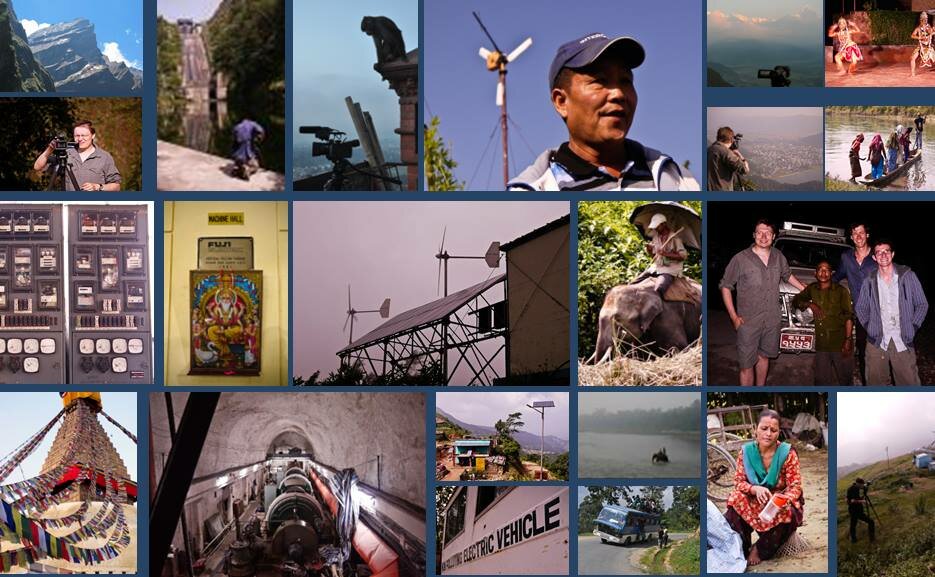
Powering the Top of the World is a new documentary by Christoph Mazur and Chris Emmott, from Imperial College London. It explores energy supply in Nepal, and the innovative solutions to sustainable energy provision in some of the most remote parts of the world. With over 1.2 billion people with no access to electricity across the globe, these issues are echoed in countries the world over. Christoph Mazur speaks to Climatica about their work in Nepal, the moviemaking process, and their night at the BAFTAs.
Tell us about your new film ‘Powering the top of the world’
 You’re a researcher first and foremost, what inspired you to make a movie?
 So you’ve been filmed before?

You seem to like engaging with the media…?
 And where have you spread your film so far?

 What was it like working in Nepal?


But judging by your film, you managed to overcome these problems?
What do you mean ‘looking for’? How did you go about the filming?
So you had some training before you started your project?
Do you need any special equipment or skills to make a documentary?

Do you have any special or favourite moments from the field?
 Has it opened up any other exciting opportunities?

And do you have any advice for other people wanting to make a film?

Would you make another film? And would you encourage other people to do it too?
Christoph Mazur is a PhD student at Imperial College London, researching innovation in electric mobility. Christopher Emmott is a PhD student at Imperial College London, studying emerging solar energy technologies. They are both funded by the Grantham Institute for Climate Change and Climate-KIC.


